Pet Stain Hardwood Floor Repair and Board Replacement in Cottonwood
Pet stains are sneaky. What looks like a surface problem is usually anything but. Moisture works its way through the finish and straight into the wood fibers, breaking them down over time. By the time you can really see the damage, the boards underneath are already compromised.
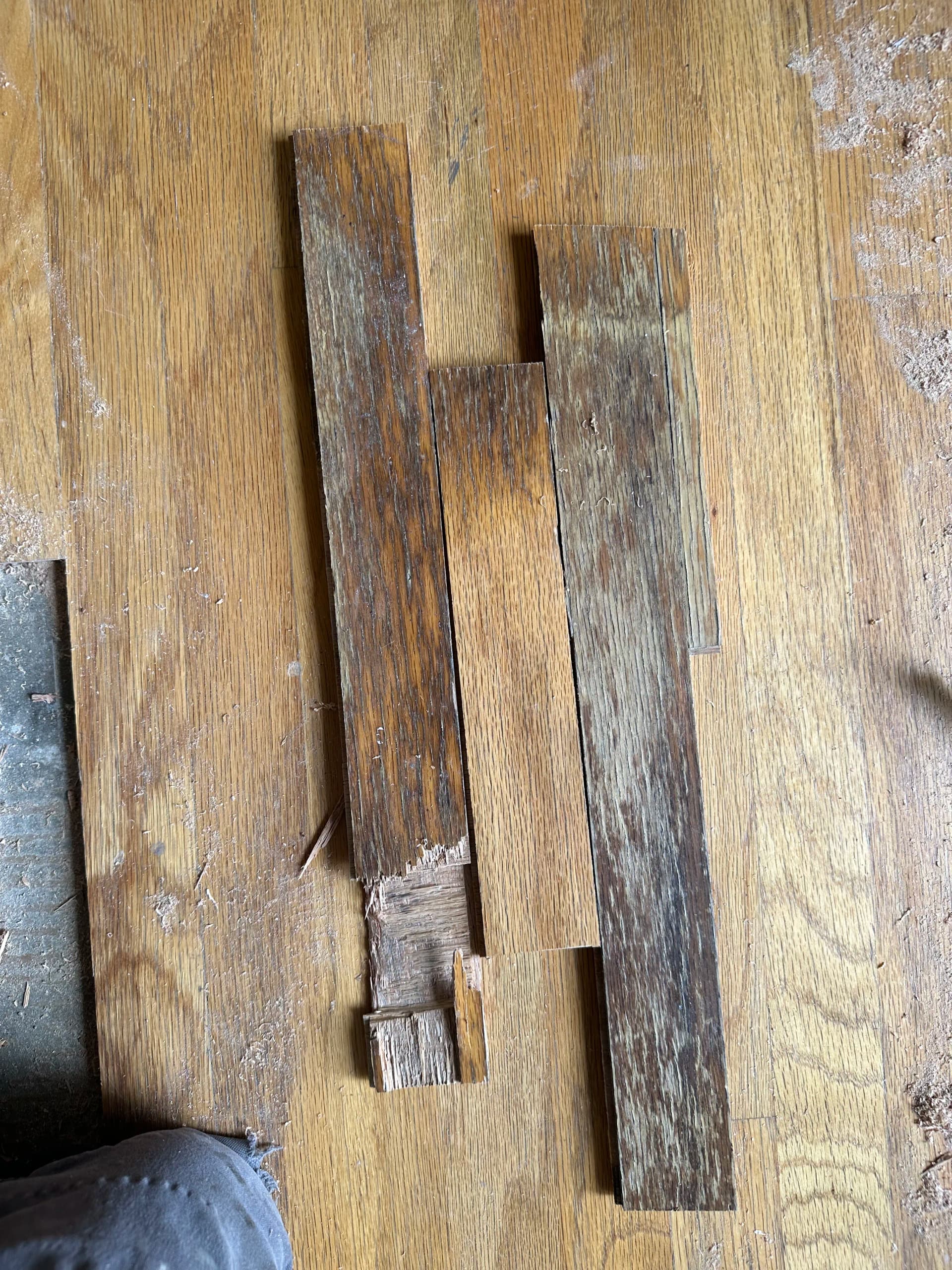
That's exactly what we were dealing with here in Cottonwood. The affected boards had soaked up enough moisture that they were dark, warped, and structurally weak - nowhere near salvageable with sanding alone. The only right move was to pull them out completely and start fresh with new boards in those spots. That's our hardwood floor board replacement process at work, and it's the only honest way to handle damage this deep.
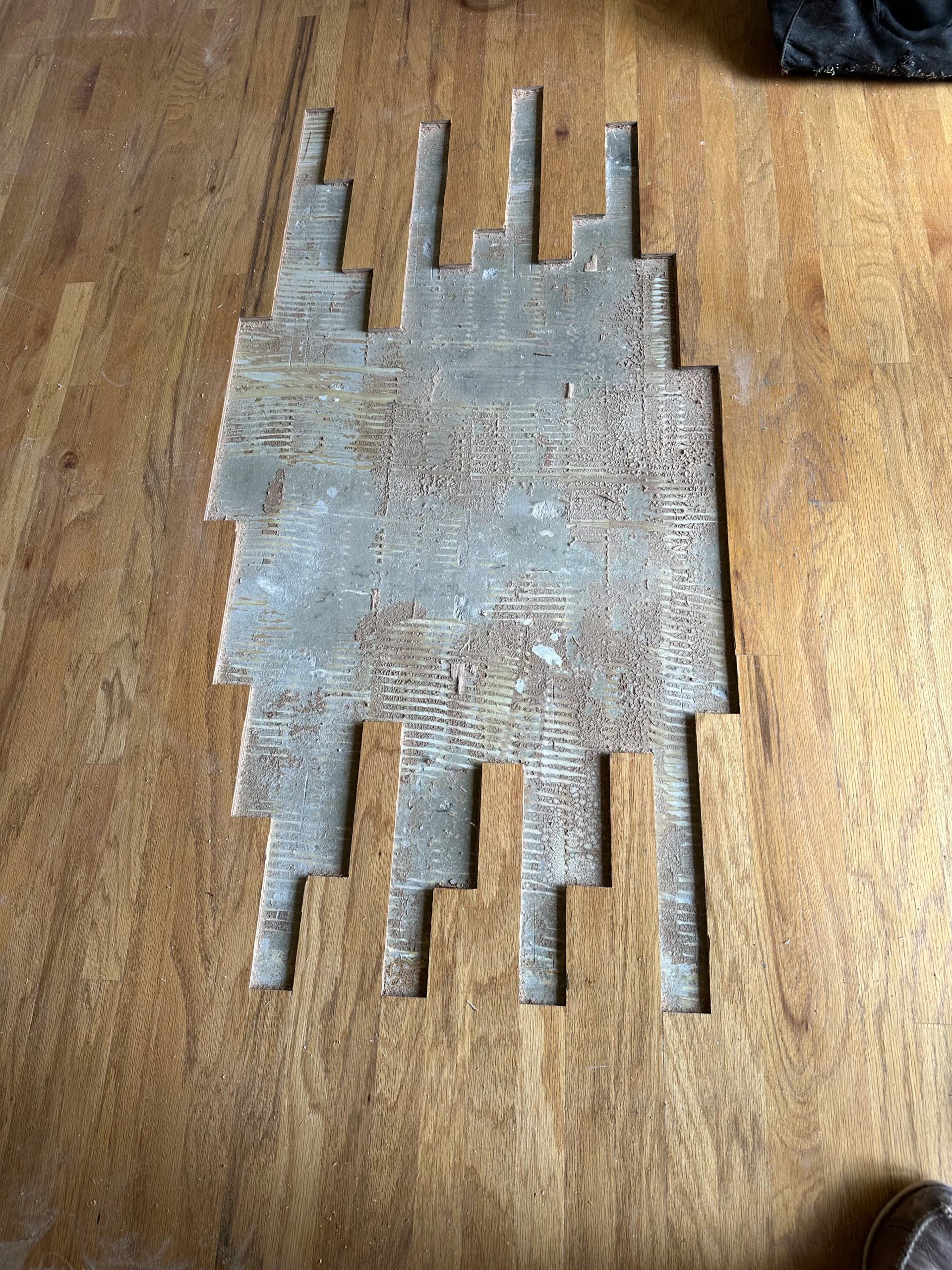
Here's what makes this type of repair tricky - you can't just swap out a few boards and call it done. The subfloor area left behind has to be clean and properly prepped before anything new goes in. You can see just how much material we cleared out in the repair zone. Getting that substrate right is what determines whether the new boards sit flat and hold long-term.
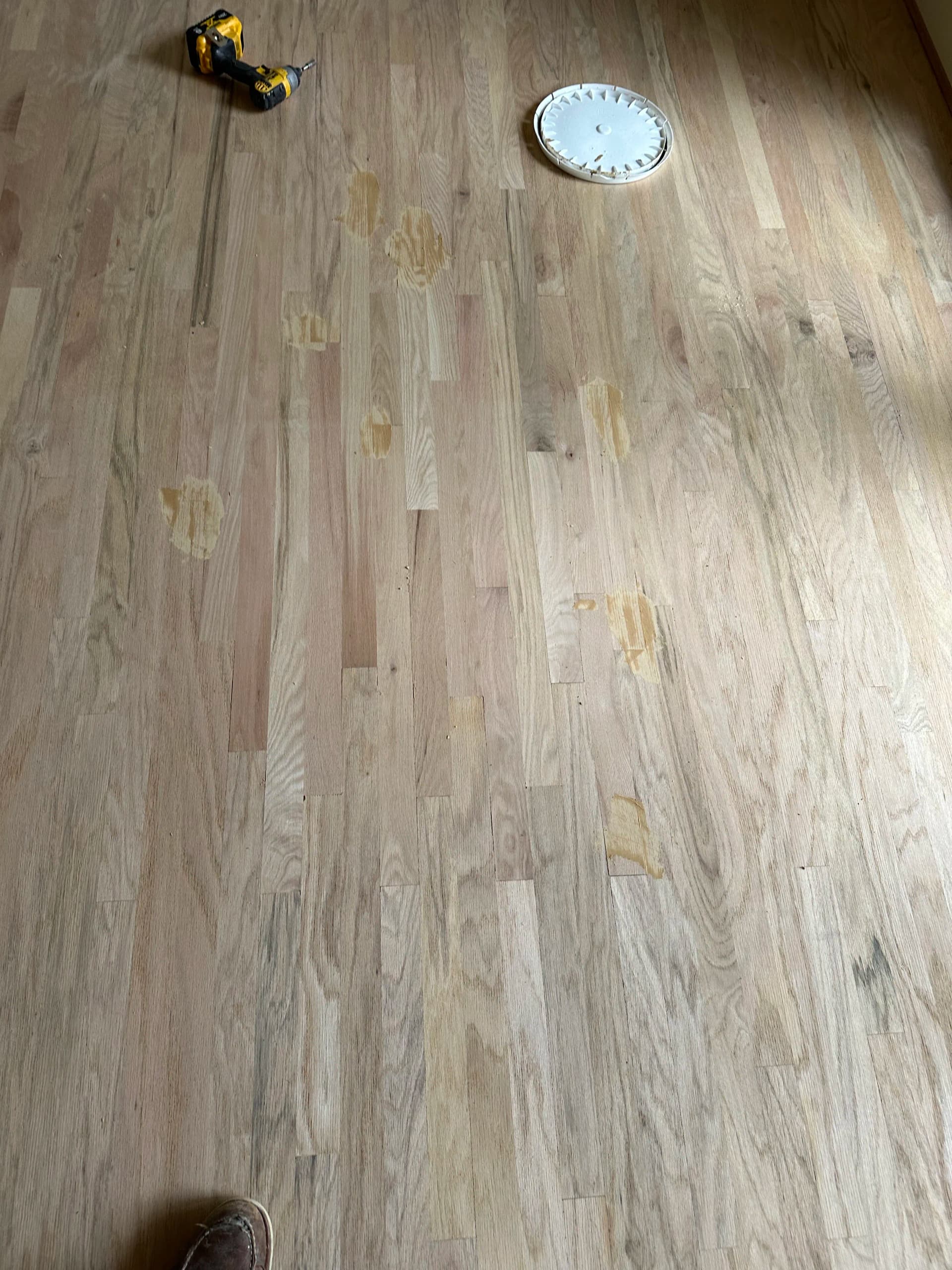
Once the new boards were in and secured, we sanded the entire floor down. That's the key step people often underestimate. Spot repairs only blend in when the whole surface gets sanded and refinished together. It ensures the new wood and the existing wood accept stain evenly, and the finished floor looks like one cohesive surface - not a patchwork fix.
The sanded floor is prepped and ready for finish. Even at this stage, before stain or sealer goes on, you can already see how much cleaner and more uniform everything looks. This is the part of the process we love - the reset before the reveal. Stay tuned for the finished result.