Hardwood Floor Water Damage Repair in Millcreek
A faulty dishwasher can do a surprising amount of damage in a short amount of time. Water gets under the boards, soaks into the subfloor, and by the time most people notice, the wood is already warped, stained, and past saving. That's exactly what we were dealing with on this Millcreek job.
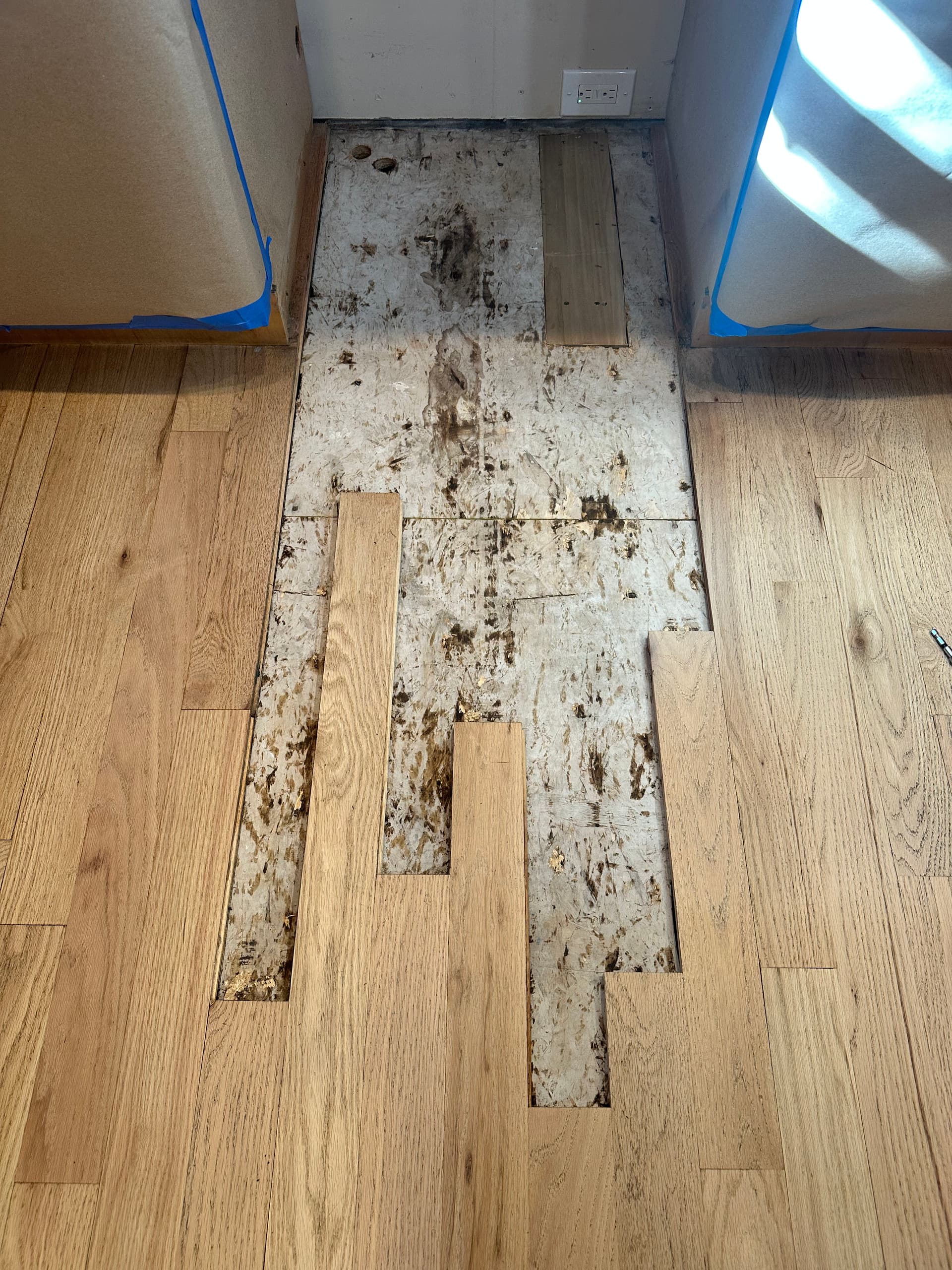
The first step was pulling the damaged boards and cleaning up the subfloor underneath - you can see the dark mold staining and adhesive residue that was left behind after removal. Getting that subfloor clean and stable before anything else goes in is non-negotiable. Skip that step and you're just covering up a problem, not fixing it.
Once the subfloor was prepped, we brought in new hardwood and let it acclimate properly to the home before installation. That part matters more than most people realize. Wood that isn't acclimated will expand or contract after it's laid down, and then you're right back to gaps and movement. We don't rush that process.
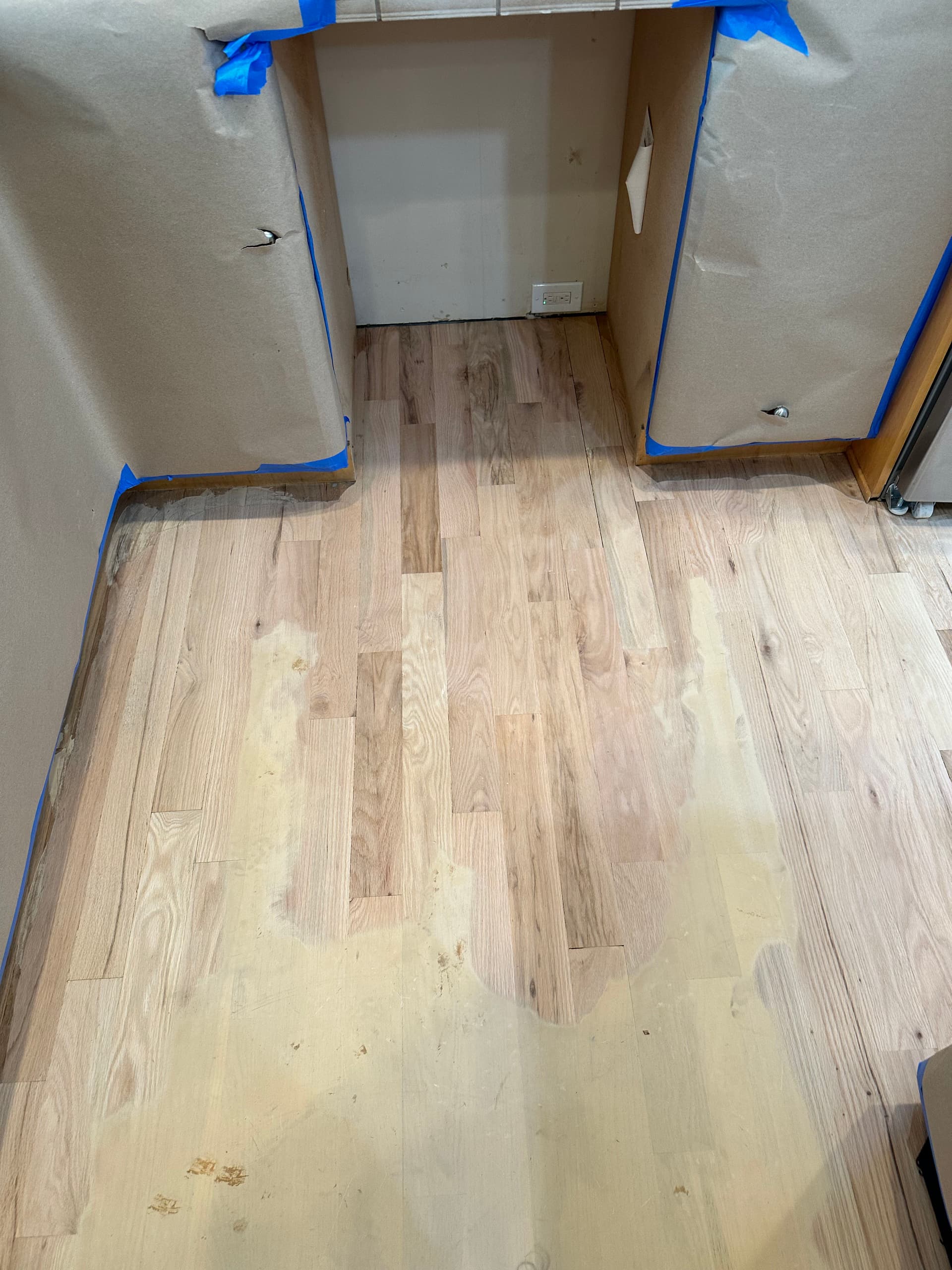
With the new boards installed and the floor sanded down, everything is now sitting at the same level and ready for a full refinish. That's where the real magic happens - sanding and finishing the entire floor so the new wood blends seamlessly with the old. You won't be able to tell where the repair was when we're done.
This is a good example of why hardwood floors are worth repairing rather than replacing. The existing floor was in great shape outside of the damaged section. A targeted repair and full refinish gets you back to a beautiful floor without the cost and hassle of tearing everything out. Finished results from this Millcreek job coming soon.