Flaking Finish on Hickory Engineered Hardwood? Here's the Fix
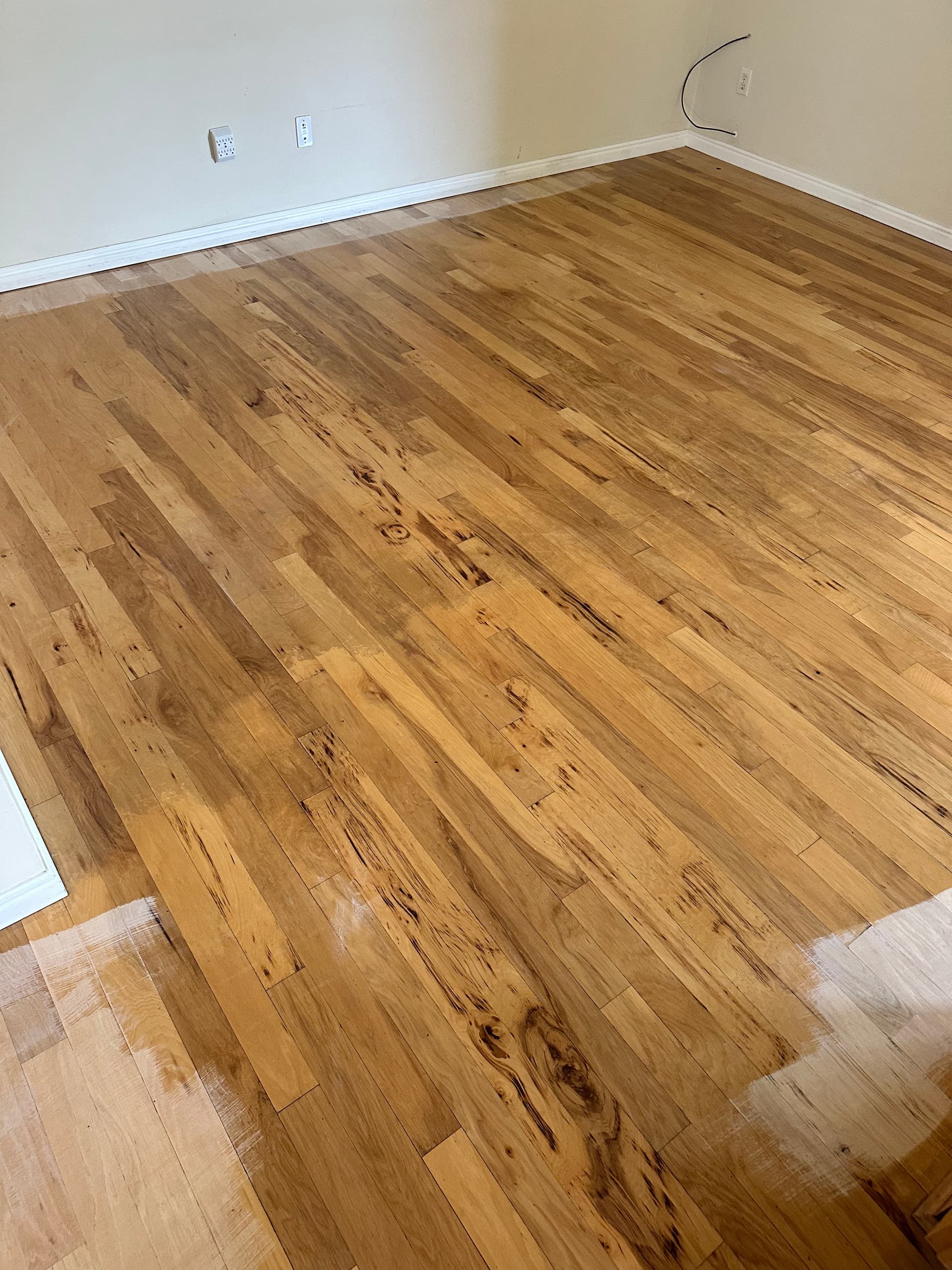
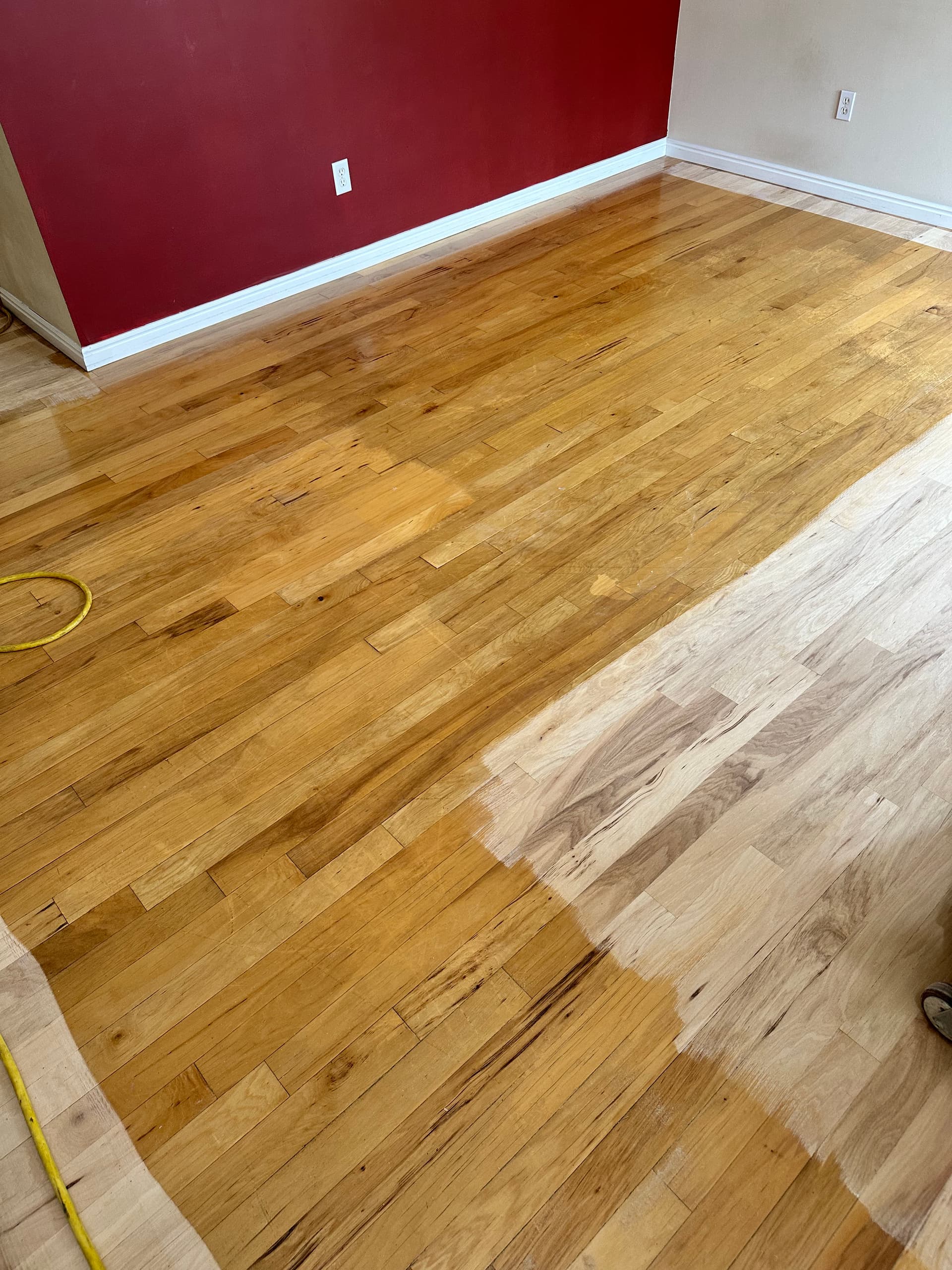
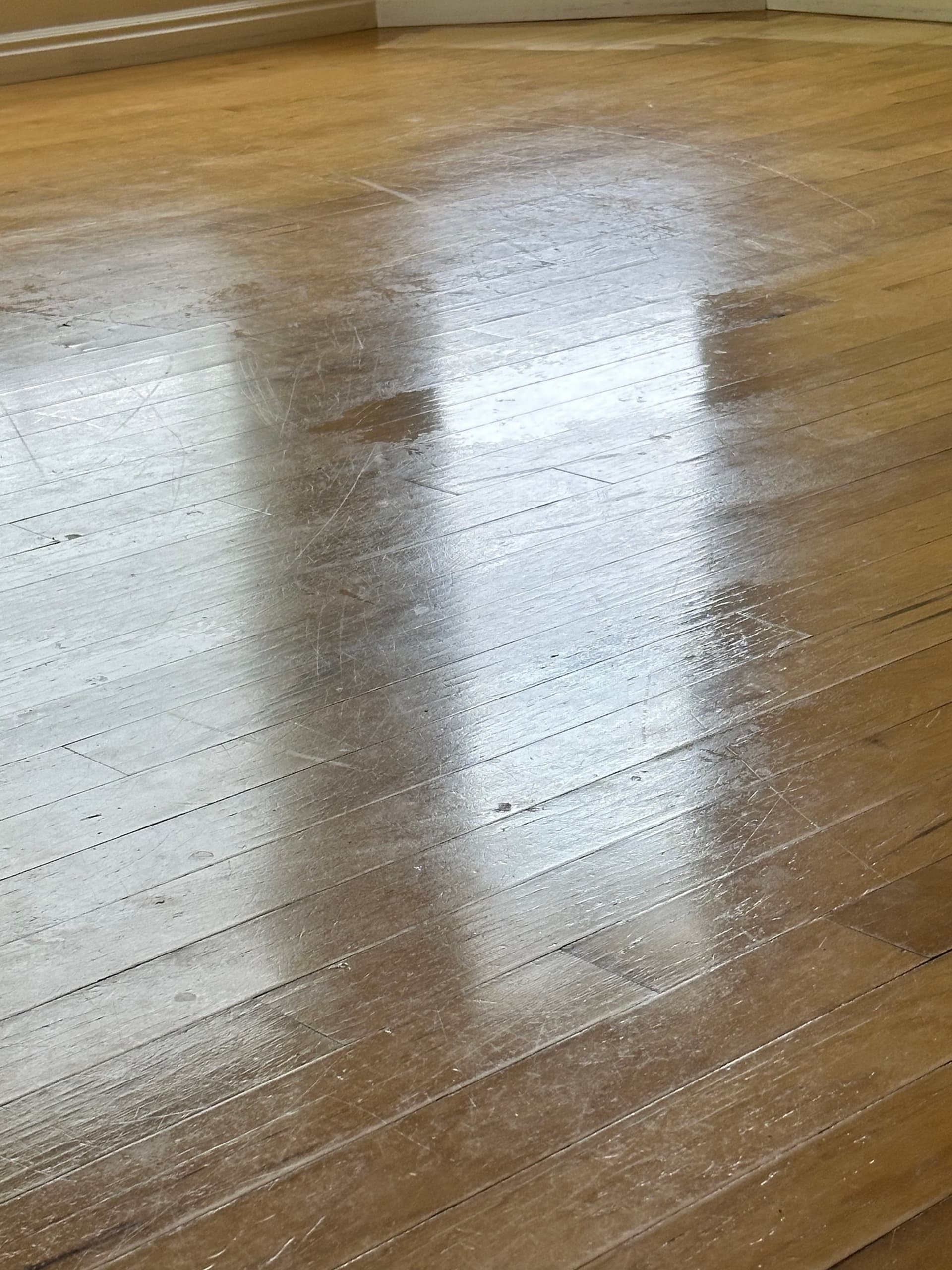
When a finish starts flaking or peeling, it's not just an eyesore - it's a warning sign. A finish that won't bond properly is one of the trickier problems we run into. You can't just slap a new coat on top and call it a day. That old, failing finish has to go first, completely, or the new coat will fail the same way.
Here's what we were working with on this job: 3 1/4 inch hickory engineered hardwood that was covered in deep scratches, flaking finish, and years of wear. The surface was dull, scuffed up across the whole field, and the finish had clearly given up in the high-traffic areas. Not a floor you could screen-and-recoat. It needed a full refinish.
The prep work is where this kind of job gets decided. We sanded the floor down carefully - engineered hardwood has a wear layer, so you have to know what you're doing to avoid cutting through it. Once we got down to clean, bare wood, you can really see what hickory looks like. It's got beautiful character - natural variation, tight grain, those dark mineral streaks running through it. That's the reward for doing the prep right.
With the surface properly prepped, the finish actually has something to bond to. That's the whole point. No shortcuts, no skipping steps. What you end up with is a floor that looks sharp and actually holds up over time instead of peeling again in a year.
This one isn't fully wrapped yet, but the in-progress shots show exactly why proper hardwood floor refinishing isn't a one-step job. When it's done right, the difference is night and day. Stay tuned for the final result on this hickory floor.