Chilean Cherry Hardwood Floors Refinished to a Satin Finish
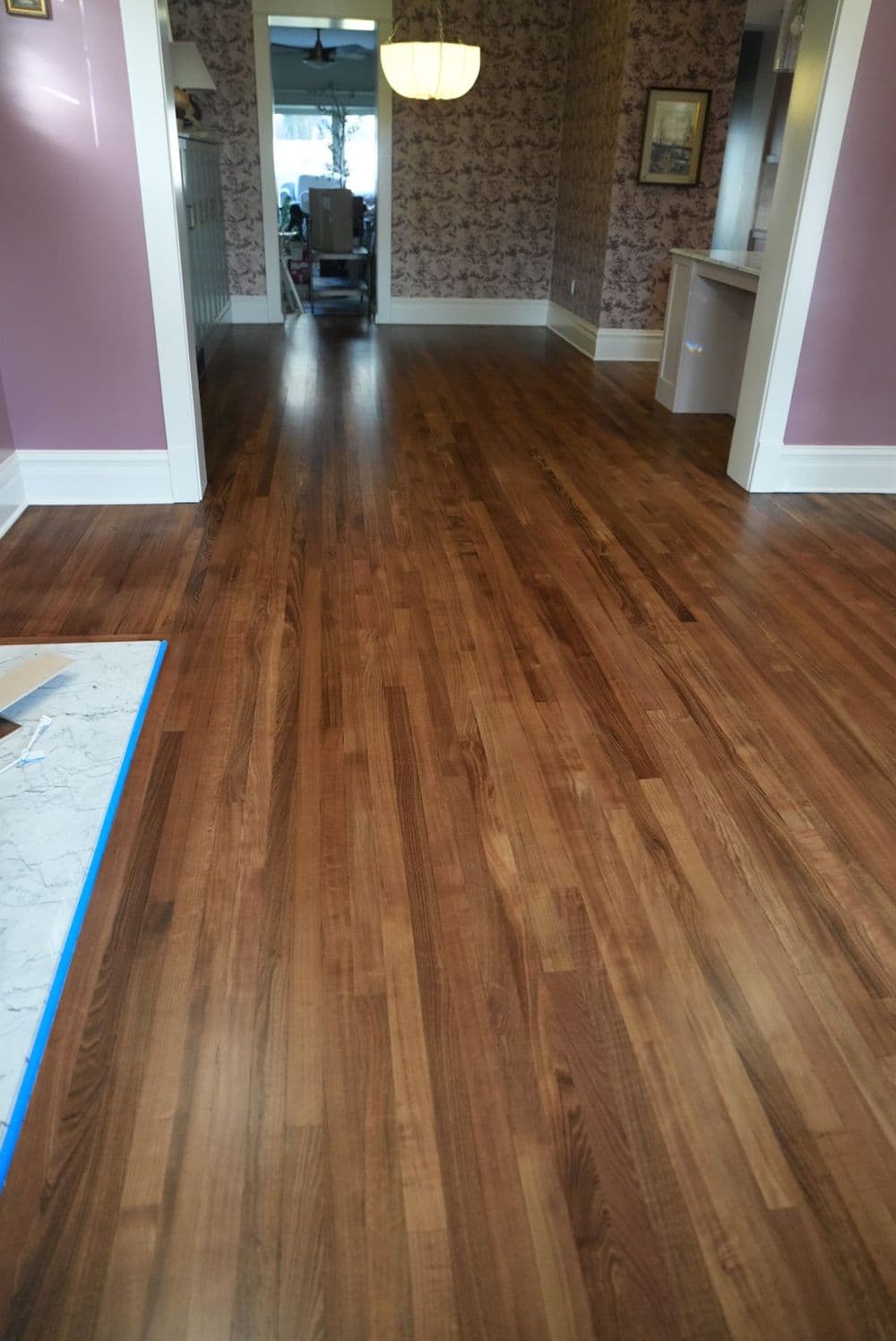
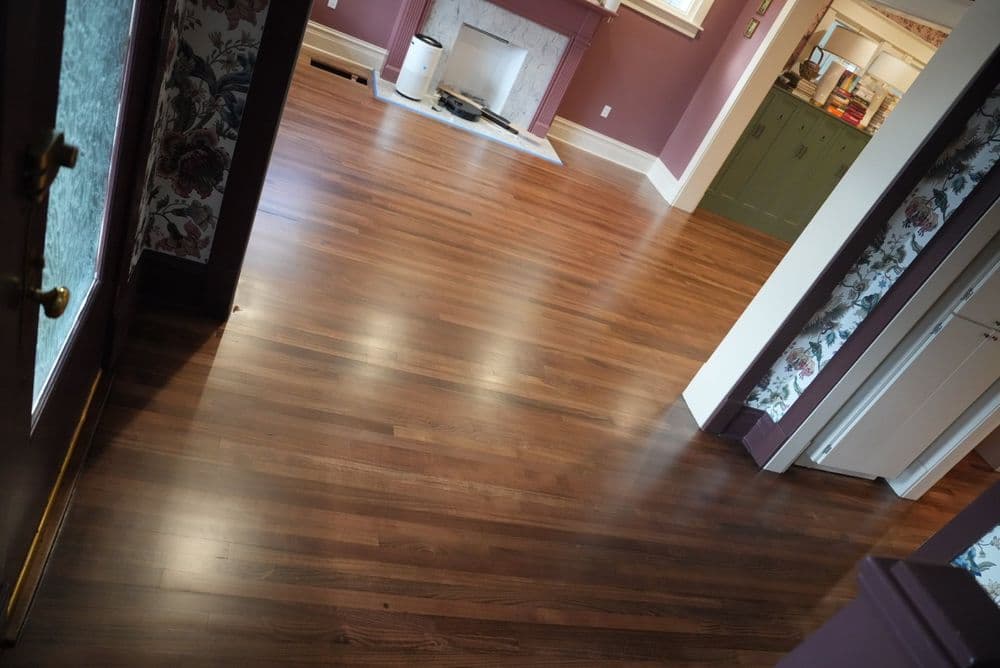
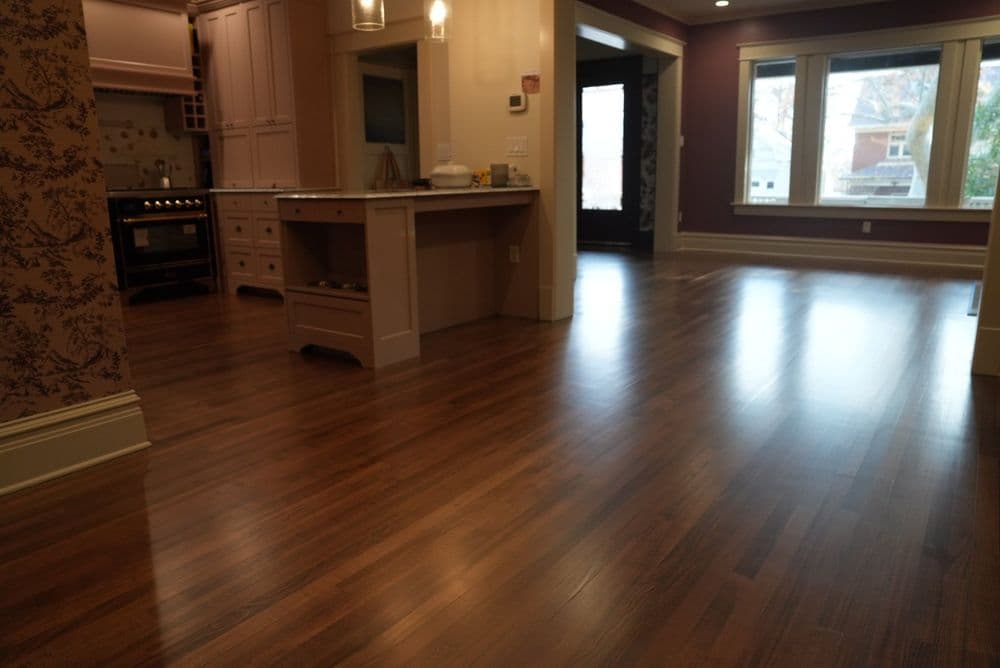
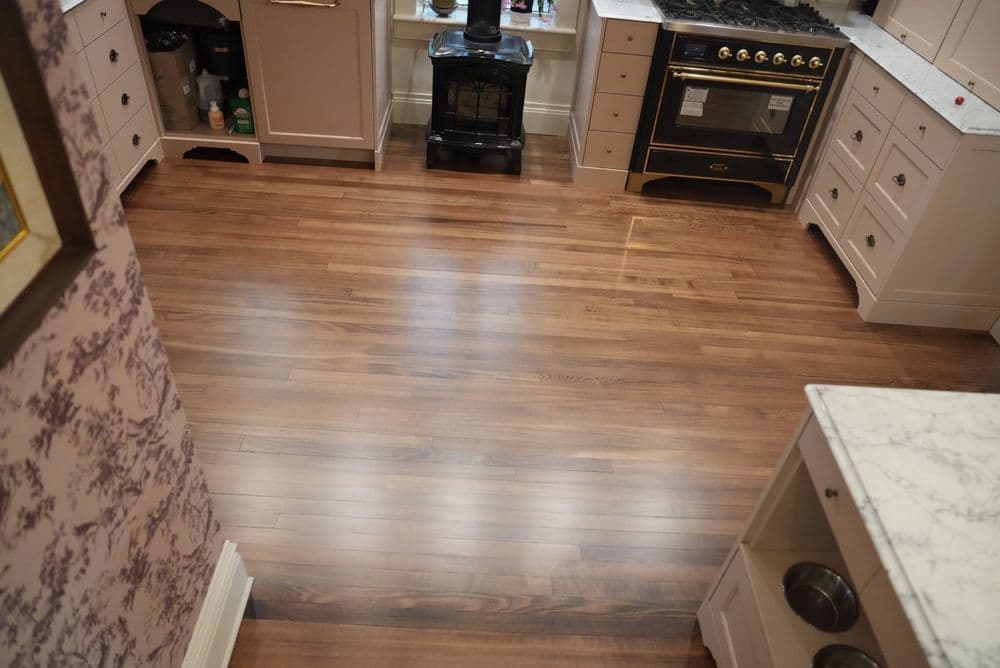
Chilean Cherry is not your average hardwood. It has a tight grain, rich warm tones, and a natural variation that makes every board look a little different. That's exactly what makes it so rewarding to work with - and exactly what makes it so easy to mess up if you don't know what you're doing.
Here's what we were working with: floors that had lost their luster, worn down from years of foot traffic running through the kitchen, hallway, and living areas. The wood itself was still solid - Chilean Cherry is incredibly dense and durable - but the finish was dull and the surface had taken a beating. The goal was to sand everything back and lay down a satin finish that would let the wood's natural character come through without going too glossy.
Satin is the right call for a home like this. It's warm without being showy. It shows off the grain and the color variation in the wood without reflecting every scuff or footprint. We took our time getting the surface prep right, because with an exotic species like this, skipping steps means uneven absorption and a finish that looks off. That's not something you can fix easily after the fact.
The finished result flows through the entire main level - from the kitchen with its marble counters and statement range, through the open living space, and all the way down the hallway. The continuity matters. When you have the same species running throughout, every room feels connected. The satin sheen ties it all together without competing with anything else going on in the space.
If you have exotic hardwood floors in the Salt Lake City area that need refinishing, species selection and finish type matter a lot. Not every floor responds the same way. We work with Chilean Cherry, Brazilian Cherry, Walnut, Hickory, and more - and we treat each one differently based on how the wood behaves during sanding and finishing.